Turning Visual Data into Operational Value
Successful computer vision projects start with understanding the problem before designing the solution.
Understanding the challenge is the first step toward a production-ready solution.
Why Computer Vision Projects Require a Different Approach
Computer Vision systems operate in the real world.
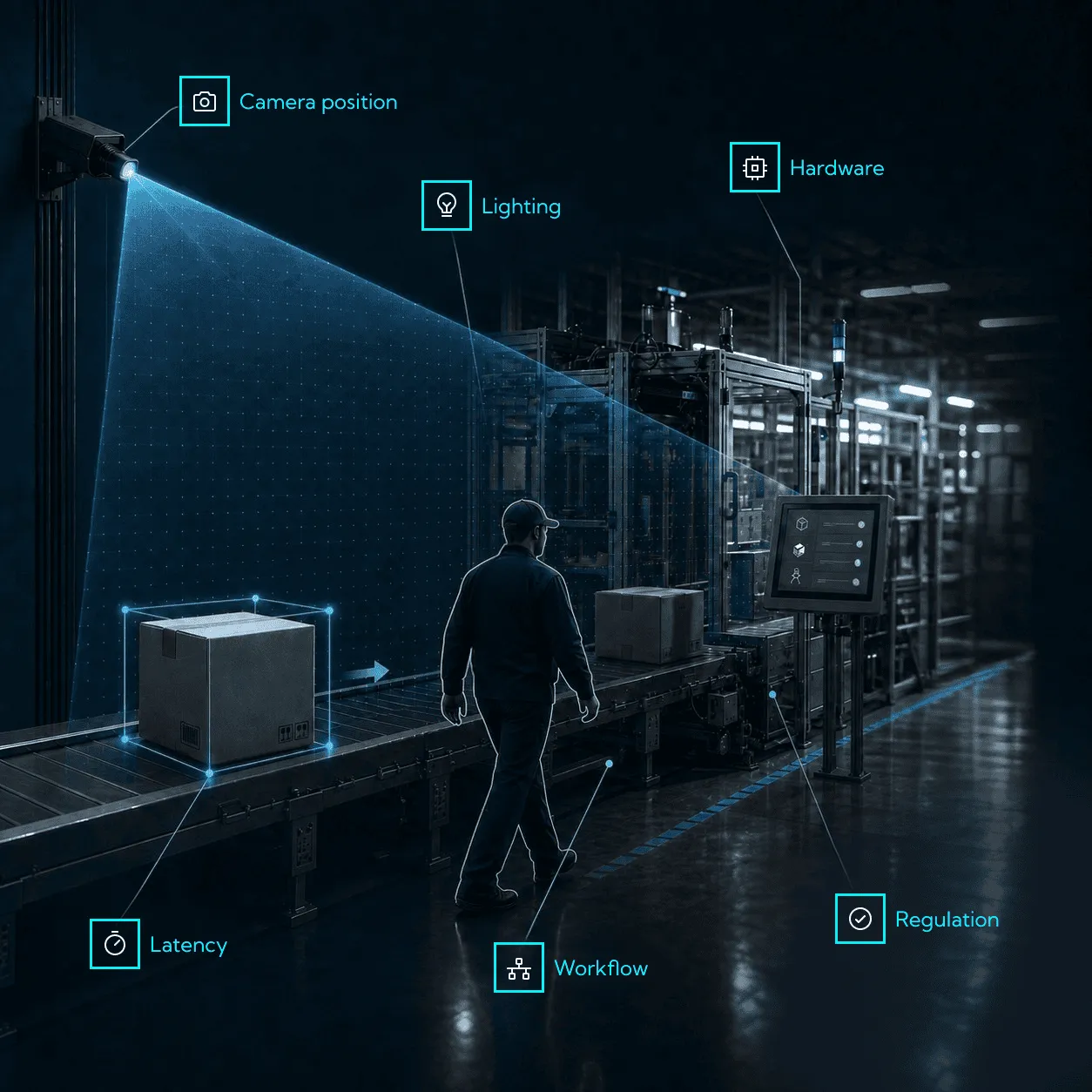
Performance depends on factors such as camera placement, lighting conditions, hardware constraints, latency requirements, regulatory considerations, and how the solution fits into existing workflows.
A model that performs well in a controlled environment may not deliver the same results under real-world conditions.
That is why successful delivery requires more than technical expertise. It requires a structured process for validating assumptions, managing uncertainty, and aligning technical decisions with operational goals.
Our focus is not whether AI can solve a problem but whether it can solve it reliably, efficiently, and in a way that creates measurable value.
The Visage Approach
Every project starts with three principles.
-
Start with Feasibility
Before committing to development, we assess the operational environment, available data, deployment constraints, and success criteria.
Early feasibility assessment reduces risk and helps clients make informed decisions before significant investment.
-
Validate Before You Build
Many use cases can be addressed using existing technologies, proven architectures, or targeted adaptations.
We evaluate available options first and introduce custom AI development only where it creates clear value.
-
Build for Production
Our goal is not a proof of concept but a production-ready system that performs reliably in the environment where it will be used.
Every technical decision is evaluated against operational requirements, maintainability, scalability, and long-term value.



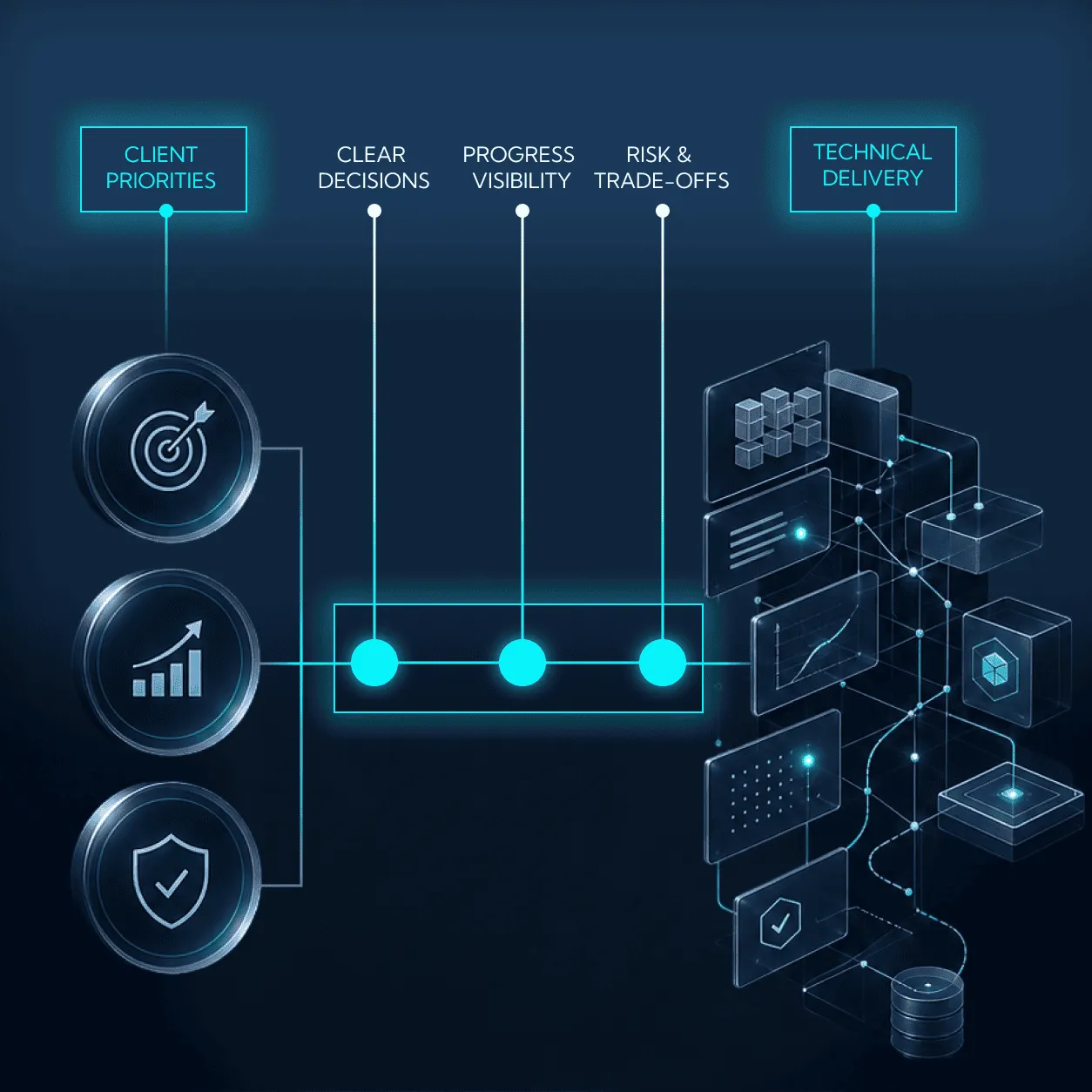
Computer Vision projects require collaboration, but clients should not have to manage technical complexity.
We provide clear decision points, transparent communication, and visibility into progress, risks, and trade-offs throughout the project.
Clients remain in control of priorities and business outcomes.
We take responsibility for technical delivery.
Reach out for a partnership built on clarity, structured validation, and a shared focus on delivering measurable operational value.
Our Delivery Model
Every solution follows a structured delivery process.
-
Discovery & Alignment
We define the use case, understand the operational environment, establish success criteria, and identify key risks and constraints.
-
Solution Design
Technology options, system architecture, and deployment requirements are evaluated to identify the most effective solution approach.
-
Iterative Development & Validation
Solutions are refined, integrated, tested, and validated under realistic conditions through structured learning and continuous feedback.
-
Deployment & Operational Readiness
The final solution is deployed, monitored, optimized, and prepared for long-term operation and support.
The process is iterative by design. As new information emerges, decisions can be refined without losing momentum or visibility.